
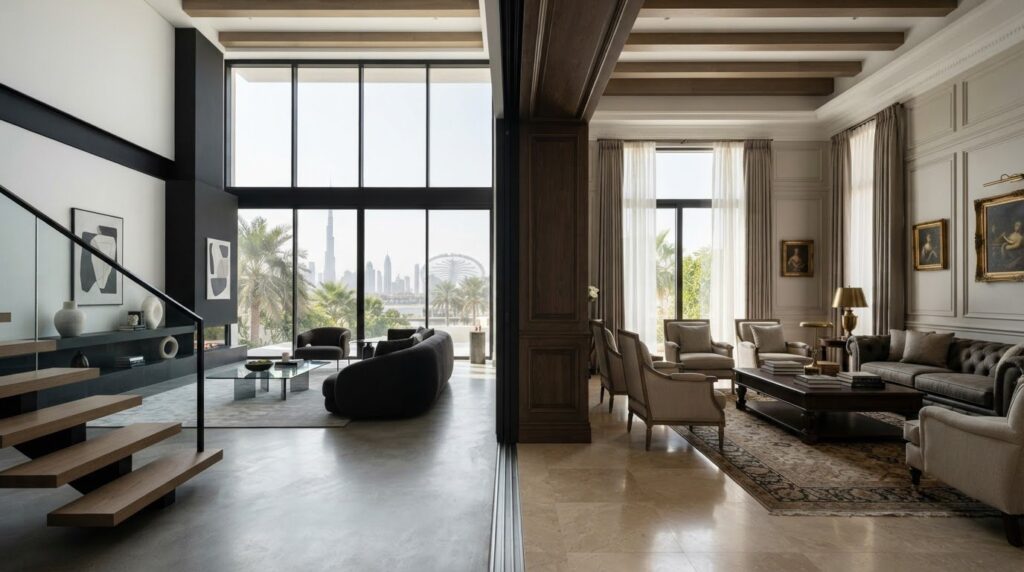
The most striking modern interior may not be the right choice for your home, and a classic look isn’t automatically more timeless. A single piece of furniture or decorative detail can make the styles seem alike, while the decisions that shape everyday comfort are less obvious.
If you’re unsure whether to choose modern or classic, you’re not alone. Your space needs to reflect your taste, support your routines and feel comfortable to live in. The right direction depends on more than appearance.
This guide explains the defining qualities of modern and classic interiors, then compares them through practical considerations such as layout, materials, furniture and everyday use. You’ll learn how each style can be adapted to your space, where their differences matter most and how bespoke furniture or joinery can support either approach. By the end, you’ll have a clearer idea of what suits you and how to brief a designer around the look you want and the way you live.
Key Takeaways
- Begin with what your space needs to support; let your preferred style guide the design without dictating every detail.
- Modern interiors can use clean lines and purposeful furnishings to support movement and daily routines.
- Classic detailing, layered materials and expressive furniture can bring character to a space.
- Compare modern and classic choices by room use, household routines, maintenance and the atmosphere you want to create.
- Prepare a clearer design brief by noting your activities, storage needs, practical constraints and visual references.
What Does Interior Design Include Beyond Choosing a Style?
A style should shape your space, not dictate every detail. Modern and classic interiors offer useful visual direction, but neither answers practical questions such as how you move through a room, where belongings are stored or how the space supports your daily routines.
Interior design brings those decisions together. It considers a room’s appearance, layout, furnishings and use so its character works alongside its practical needs. Decoration focuses more narrowly on visible finishes and accessories. For a broader overview of the profession and its history, read Interior design.
Design determines how a space works and feels; decoration refines the visible details within it. The two are connected, but decorative choices are most effective when they support a considered plan.
How Interior Design Differs from Interior Decoration
Start with layout and function: consider who uses the room, what activities it needs to support and how people should move through it. For a living room used for conversation and quiet reading, arrange seating to support both activities. Keep routes between the entrance and other parts of the room clear, and place storage where it will be convenient to use. Lighting, furnishings and finishes can then reinforce a shared design direction rather than compete for attention.
This order can make the final result feel more cohesive. A distinctive finish or accessory may be beautiful on its own, but still feel out of place if it doesn’t suit the room’s use or layout. Bespoke furniture and joinery can also be considered as part of the plan, helping match functional requirements with your preferred visual character.
Why Compare Modern and Classic Interiors?
Modern and classic styles are reference points, not fixed rules. You might be drawn to the clean visual character often associated with modern spaces while preferring the crafted details or sense of history found in classic design. Combining selected elements can create a personal result, provided each choice relates to the room as a whole.
To make a confident choice, compare more than appearance. Consider how each direction supports the room’s function, what care its chosen furnishings and finishes require, and whether the atmosphere feels right to you. Think about adaptability, too: will the choices still suit you if your routines change? These practical questions create a stronger foundation for choosing a style and briefing a designer.
Modern Interior Design: Clean Lines, Open Layouts, and Purposeful Details
A modern approach can feel calm and refined, but it doesn’t require a bare room or a strict set of rules. It organises space around clear forms, considered furnishings and the needs of the people who use it. The aim is to balance appearance with everyday function.
A modern interior uses clean lines, purposeful planning and selected details to create a space that feels current and works for its intended use. You can adapt these cues to your preferences, from a restrained palette to warmer textures or a few expressive pieces.
What Makes a Modern Interior Feel Considered?
Start with furniture placement. Seating, work surfaces and storage should serve a clear purpose and leave comfortable routes through the room. An uncluttered layout can make everyday movement easier, while carefully chosen pieces give the space character without crowding it. Minimalism is one possible expression of modern design, not a requirement.
Lighting and negative space also shape the atmosphere. A well-positioned light can bring focus to a reading area or work surface, while open wall or floor space gives the eye room to rest. Choose finishes in response to how the room will be used: consider which surfaces are handled often, how they should be maintained and whether their appearance suits the mood you want. The aim is to balance visual harmony with practical demands.
Where Modern Design Can Work Well
A modern approach can be tailored to different settings. At home, it may support flexible living by keeping circulation clear and giving storage a considered place. In a work environment, defined zones and purposeful furniture can help people move between focused tasks and shared activities. In hospitality spaces, the design can respond to how guests arrive, gather or wait, while furnishings and lighting contribute to the intended experience.
None of these settings calls for a single formula. The right choices depend on who uses the space and what they need to do in it. Bespoke furniture or joinery may help address specific storage, layout or work-surface requirements while maintaining a consistent visual direction.
To translate your preferences into a practical plan, consider design consultancy as a way to align the look you want with the way you need the space to function.
Classic Interior Design: Character, Craft, and Enduring Visual Detail
A classic direction can give a room a sense of presence through considered proportions, decorative details and furnishings with defined character. These are options, not rules. Introduce them selectively to create an expressive space without letting ornament crowd out comfort, circulation or the way you use the room.
Classic design doesn’t guarantee timeless appeal. Its success depends on how the details work together and whether they suit your space and preferences. For context on how design approaches develop over time, explore this account of the evolution of interior architecture.
Which Details Give a Classic Interior Its Character?
Proportion helps establish visual balance, while decorative detailing can draw attention to selected parts of a room. Layered textures and carefully chosen furnishings add depth and presence. Colour and material choices bring these elements together: a coordinated palette can feel composed, while contrast may create a more dramatic mood. You don’t need to include every detail. Select the ones that support the atmosphere you want.
What to Consider Before Choosing a Classic Look
Consider how much visual detail feels comfortable in your particular space. A room with limited circulation may benefit from fewer prominent pieces, while a larger room might accommodate more layered furnishings. Think about storage and comfort alongside appearance, and check the care requirements of the finishes and furnishings you select. A design should feel inviting in daily use, not simply impressive at first glance.
You can balance classic character with contemporary restraint. For example, pair a detailed focal point or expressive piece of furniture with simpler surrounding forms to create contrast without visual competition. Bespoke furniture or joinery may also be worth considering when a particular room requirement calls for a tailored solution.
A simple pros-and-cons check can clarify the fit:
- Potential advantages: Decorative detail and layered furnishings can create a distinctive, characterful atmosphere.
- Potential considerations: More visual elements need thoughtful placement and care to keep the room comfortable and cohesive.
Neither side decides the choice for you. Weigh the character you want against the room’s layout, storage needs and upkeep, then select classic details that serve both your taste and everyday life.
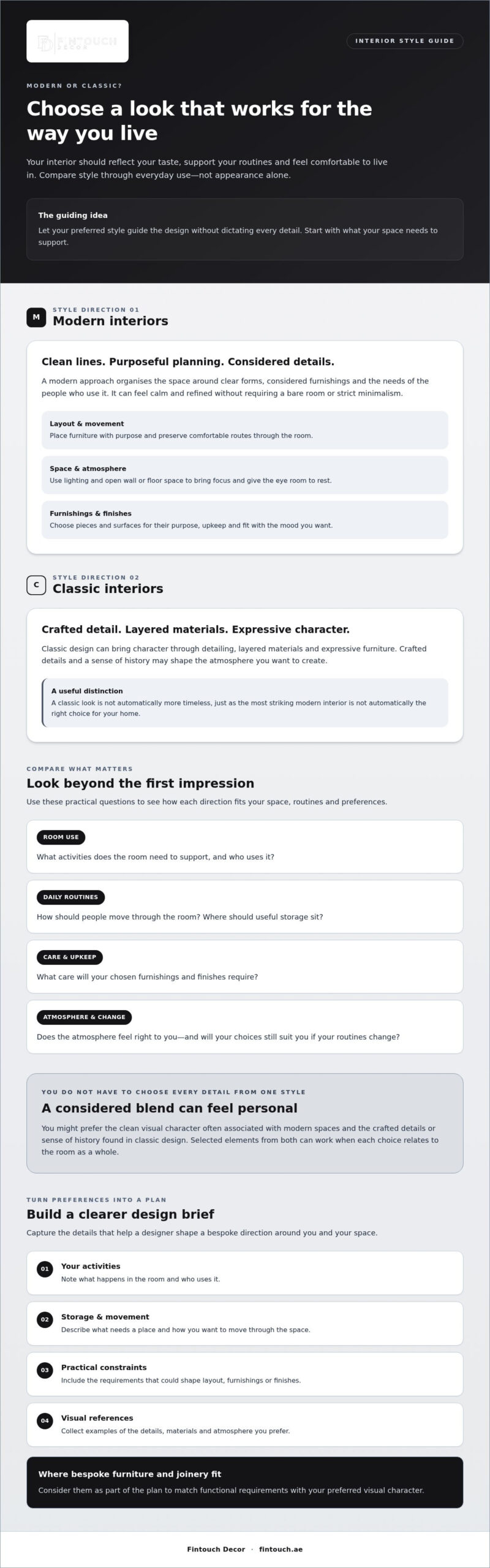
Modern vs Classic Interiors: Compare Function, Materials, and Atmosphere
Appearance can help you identify a preference, but everyday use is a stronger test. Compare how each direction supports your routines, what care its chosen finishes require and the atmosphere you want to experience. Durability depends on the specific material and how it’s maintained, not simply on whether a design is modern or classic.
| Consideration | Modern direction | Classic direction |
|---|---|---|
| Visual character | Often defined by clean lines and purposeful details. | May feature considered proportions and more decorative detail. |
| Layout | Can prioritise open visual space and clear movement. | Can arrange furnishings to create a more layered composition. |
| Furnishings | Selected for function and a clear, cohesive form. | May give furniture greater visual presence in the room. |
| Detailing | May use restrained accents and simpler visual transitions. | May include more pronounced decorative elements and textures. |
Which Style Fits Your Space and Daily Routine?
Think through how people use the room throughout the day. Do you need clear floor space for movement, or distinct areas for gathering, reading or working? An open visual arrangement may suit a priority for easy movement, while layered furnishings and detail can help establish a more intimate, characterful atmosphere. Neither approach is automatically better for a particular room or household. Let the layout, activities, storage needs and preferred level of visual detail guide your decision.
Include upkeep in the comparison. Ask how the selected finishes should be cared for and whether that routine works for your household. Don’t assume that a modern finish is easier to maintain or that a classic one is less durable. Check the care requirements of the actual materials and furnishings you’re considering.
Can You Combine Modern and Classic Interior Styles?
Modern and classic features can work together when you choose each element deliberately and repeat a few visual cues to create cohesion. Let one direction guide the overall composition, then use the other for selected accents. Repeating a colour, finish or form in a few places can help the combination feel intentional rather than unrelated.
Illustration: Imagine a living space with a modern, open arrangement and streamlined furnishings, complemented by one classic-style focal piece. Repeating its finish or colour in a smaller detail elsewhere could connect the elements without filling the room with ornament. The right balance depends on your preferences and how you use the space.
Ready to shape a tailored direction around your room and routines? Explore bespoke design consultancy for a considered approach to your interior.
How to Choose an Interior Direction and Brief a Bespoke Design
A clear brief turns a preference for modern, classic or a considered blend into decisions a designer can work with. Start with the way you live, then gather visual references and weigh practical priorities before confirming a direction. This keeps appearance, comfort, function and durability in view together.
Use this sequence to organise your thinking:
- Note your needs: Record the room’s activities, storage requirements, preferred atmosphere and practical constraints.
- Collect references: Save images that show details you like, such as a layout, furniture shape or level of ornament.
- Compare priorities: Decide what matters most, from ease of movement to visual character and upkeep.
- Confirm the brief: Summarise your preferences and needs so they can guide the design decisions.
What to Include in an Interior Design Brief
Be specific about how each room needs to function. List its intended uses, essential features, preferred details and anything you want to avoid. Reference images are useful when you identify what appeals to you in each one. Describe a colour, furniture form or lighting effect rather than asking to reproduce an entire room. Note custom furniture or joinery only where it addresses a defined need, such as a particular storage requirement or work surface.
Include practical constraints alongside the visual direction. Consider the existing layout, the routines the room must accommodate and how much care you’re comfortable giving the selected finishes. A well-balanced brief gives a designer room to shape an elegant result without losing sight of daily comfort or function.
When to Seek Design Consultancy
Professional input can help when layout, joinery and finishes need to work as one plan, or when you’re balancing preferences across several rooms. If you’re planning wider changes, consult a luxury home renovation guide as well, and make sure the intended scope is clear from the outset.
Fintouch Decor’s design consultancy and residential or commercial fit-out services may be relevant if you want support aligning your preferred aesthetic with practical requirements. Explore tailored interior and fit-out solutions when you’re ready to shape a space around your routines, comfort and personal style.
Shape a Space That Feels Distinctly Yours
Modern and classic interiors offer different visual languages, but neither should dictate every choice. Clean lines and open arrangements may suit your priorities, while crafted details and layered furnishings can bring character. You can also combine selected elements, provided they support a cohesive direction.
Let your decision begin with how you use the room. Consider its activities, storage needs, preferred atmosphere and the care required by your chosen finishes. A clear brief helps connect appearance with comfort, function and durability, so the finished space feels considered in everyday life as well as visually refined.
Fintouch Decor offers design consultancy and residential and commercial fit-out services, including the creation of bespoke furniture. If you’re ready to develop a direction tailored to your requirements, explore bespoke interior and fit-out solutions. Get in touch to discuss a space that reflects your style and supports the way you live or work.
Frequently Asked Questions
What does interior design include?
Interior design plans how a space looks, feels and functions. It considers the layout, furnishings, lighting, finishes and how people will use the room, while decoration focuses more on visible details such as accessories and surface finishes. For example, a living room plan may first address seating, circulation and storage, then select colours and decorative pieces that support the overall direction.
What is the difference between modern and classic interior design?
Modern design often uses clean lines, purposeful furnishings and restrained details, while classic design may draw character from considered proportions, layered textures and more decorative elements. These are broad reference points, not fixed rules. Either approach can be tailored to your space and preferences. Compare how each affects the room’s layout, atmosphere, upkeep and daily function rather than judging by a single furniture piece.
Can modern and classic interior styles work together?
Yes. You can use one style as the overall direction and bring in selected features from the other. For example, a clean-lined room might include a classic-style focal piece, with a repeated colour or finish to connect the choices. Keep the combination deliberate: a few recurring forms, colours or finishes can help create cohesion without making the space feel visually crowded.
How do I choose an interior style for my home?
Start with how you use each room, then note your storage needs, preferred atmosphere and practical constraints. Gather reference images and identify the specific details you like, such as a furniture shape, layout or level of ornament. Compare those preferences with comfort, maintenance and durability needs. Choose the direction that supports your routines, rather than selecting a look based only on its appearance.
Is modern interior design always minimalist?
No. Minimalism is one possible expression of modern design, but it isn’t a requirement. A modern room can include expressive furnishings, layered textures or decorative accents while retaining purposeful planning and a cohesive feel. The key is to choose details that suit the room’s use and leave enough space for comfortable movement. Your preferred level of visual detail can shape the result.
What should I include in an interior design brief?
Describe the room’s intended activities, essential functions, storage requirements and practical constraints. Add the atmosphere you want, preferred features and details you dislike. Reference images can help, especially when you explain what appeals to you in each one instead of asking to copy a whole room. Include custom furniture or joinery needs when they solve a defined requirement, such as storage or a work surface.