
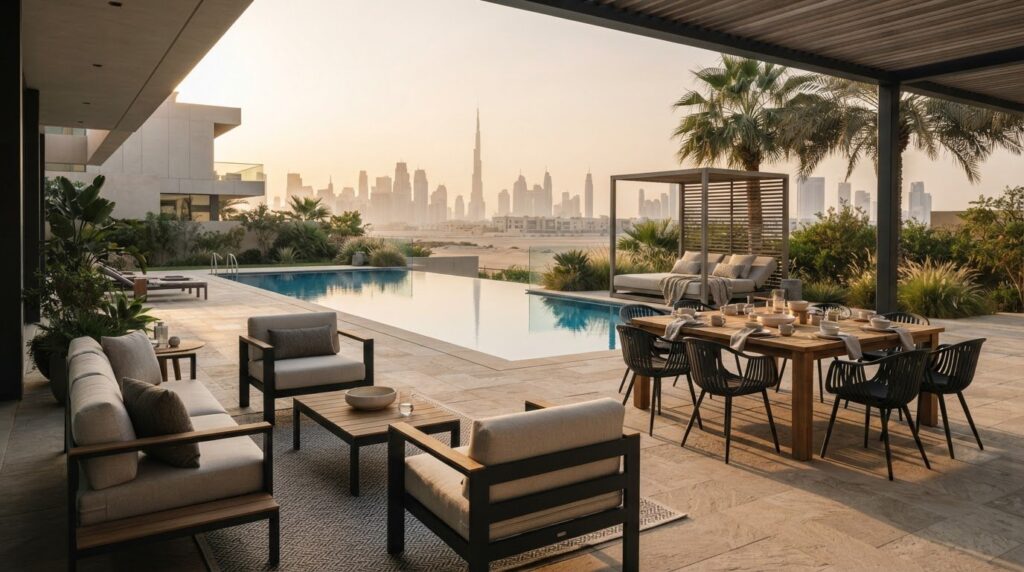
The most striking outdoor set may still be the wrong choice for your space. If you’re comparing outdoor furniture Dubai options, start with the site’s exposure and how you plan to use it, not appearance alone.
Choosing furniture for an outdoor area involves more than finding a style you like. The pieces need to feel comfortable, suit the setting and fit the way you use the space. In the UAE, sun, heat, humidity and coastal conditions make it important to check the material and product care guidance for your specific site.
This guide compares outdoor furniture by setting, intended use, materials, comfort and design fit. You’ll find practical ways to plan for different activities, balance durability with a cohesive look, and decide whether bespoke furniture from Fintouch Decor could suit a particular layout or design direction. It also explains how furniture can work alongside landscape and exterior design to create a practical, considered setting.
Key Takeaways
- Choose outdoor furniture dubai options by considering site exposure, intended use, available space, comfort and how each piece fits your design vision.
- Compare materials for appearance, comfort, care needs and suitability for your particular outdoor setting before narrowing your choices.
- Plan dining, lounging or mixed-use layouts around activities and clear circulation, then coordinate colours and finishes with your architecture and landscape.
- Use a practical checklist to review measurements, users, exposure, upkeep and project coordination before committing to furniture.
- Consider bespoke furniture when ready-made pieces don’t suit your layout or design direction, and plan it alongside landscape and outdoor design.
How to Choose Outdoor Furniture for Your Space and Its Intended Use
For homeowners and project teams across the UAE, choosing outdoor furniture is about more than finding a style that looks right. A beautiful set may still feel out of place if it blocks a walkway, offers too little seating or doesn’t suit the site’s exposure. If you’re comparing outdoor furniture dubai options, begin with how the space will work, then assess comfort and design.
Outdoor furniture is seating and furnishings selected for an exterior setting and its planned use. A useful selection framework considers five points:
- Site exposure: Observe sun, shade, moisture, dust and other conditions where the furniture will sit.
- Intended use: Decide whether the priority is dining, relaxation, socialising or a combination.
- Available space: Plan around the usable area and the routes people need to move through.
- Comfort: Consider how long people will sit and what support the activity calls for.
- Design fit: Relate furniture shapes and finishes to the architecture and landscape.
Which outdoor furniture suits a home, hospitality space, or business?
An intimate residential patio may suit a small seating arrangement for everyday relaxation. A poolside setting needs a layout that accounts for movement between the seating and pool. Hospitality areas may need flexible arrangements for different group sizes and activities. A corporate outdoor area can be planned for informal breaks, meetings or shared gatherings, depending on how people will use it.
For any setting, consider the number of users, the main activities and the maintenance routine you can support. Sketch the routes people take between doors, seating, dining areas and landscape features. This can reveal crowded or blocked paths before you choose furniture.
What should you assess before comparing furniture?
If possible, visit the space at different times and note where direct sun and shade fall. Record areas exposed to moisture or dust, as well as sheltered spots. These observations give you a more useful basis for comparing options. For background on categories and common outdoor furniture materials, Wikipedia’s overview offers a starting point; suitability still depends on your specific site.
Measure the usable area and mark doors, walkways, pools and landscape features on a simple plan. Then set priorities: how many people should the space seat, is a dining surface needed, and do you need to accommodate relaxation or storage? Finally, define the look you want. A clear brief makes it easier to compare furniture for function, comfort and design fit, rather than appearance alone.
Outdoor Furniture Materials: Compare Comfort, Care, and Site Suitability
Material affects how outdoor furniture looks, feels and fits into your care routine. In the UAE, furniture may face strong sun, heat, humidity or dust. The right choice depends on the specific site and the product’s documented guidance. There is no universal winner: your priorities and the conditions where each piece will sit matter.
Choose outdoor materials to suit both your site conditions and the maintenance routine you can sustain. Use this comparison to guide questions, not as a claim about every product made from a particular material.
| Material option | Appearance | Comfort considerations | Care and site suitability |
|---|---|---|---|
| Timber, such as teak | Natural grain and a warm, crafted character. | Can feel welcoming as a seat or table surface; cushions may change the feel of a chair or bench. | Ask what finish care is needed and how the specific timber should be cleaned. Check the supplier’s guidance for your site’s sun and moisture exposure. |
| Metal, such as aluminium or steel | A clean, structured look that can suit contemporary or traditional settings, depending on its form and finish. | Test the seat shape and surface in the intended setting; consider whether cushions are needed for longer periods of sitting. | Ask how to care for the specific finish and what conditions it is intended for. Don’t assume every metal or coating performs the same way. |
| Synthetic options, such as woven-look materials or plastic | Can offer a woven texture or a simpler, streamlined appearance. | Comfort depends on the design, support and any cushions, not just the material category. | Request cleaning instructions and documented guidance for the exact product, including its suitability for your site’s exposure. |
How do you compare outdoor furniture materials?
Compare timber, metal and synthetic options against the same brief. Ask suppliers how to clean each item, care for its finish and source replacement parts if needed. Request written product guidance rather than relying on broad claims about a material. Expert advice on patio sets can offer another perspective on balancing material, climate and style. Confirm that any product guidance applies to the item you’re considering.
How do comfort and maintenance affect long-term use?
Try the seat if possible. Consider seat depth, back support and whether the furniture suits dining, reading or relaxed conversation. For cushions, check how they’re handled and cared for. Decide who will clean, move, cover or store each piece, too. A design that looks refined but requires more upkeep than your space can support may not be the right fit.
For outdoor furniture dubai selections, compare the supplier’s product-specific care information with your site observations before deciding. If standard options don’t suit your layout or design direction, explore bespoke outdoor furniture as a tailored alternative.
Match Outdoor Furniture Styles and Layouts to the Way You Live
A considered layout starts with the activity, not the furniture catalogue. A dining arrangement supports shared meals, while a lounge setting invites conversation or quiet relaxation. A mixed-use plan can combine these functions when a space serves several purposes. Choose an arrangement based on how people will use the setting and move between the home, garden, pool or other exterior features.
Should you choose a dining set, lounge setting, or flexible layout?
Start by identifying the main activity. If dining is the priority, position the table so people can sit and move around it comfortably. For conversation, arrange seating to bring people together while preserving a clear route through the space. Near a pool, consider how furniture placement affects access and circulation.
Fixed groupings can give a space a clear focal point, while movable pieces offer flexibility as activities change. Before deciding, mark the furniture footprint on a plan and check the routes between doors, seating and landscape features. A flexible layout works best when pieces can be rearranged without making essential paths awkward or obstructed.
How can outdoor furniture feel connected to the wider design?
Bring the setting together through a considered palette. Echo a tone from the exterior finishes, repeat a selected material in smaller details, or use a restrained contrast to define the seating area. Repetition creates visual continuity, while varied forms can add interest without making the setting feel disconnected.
Look beyond the furniture itself. Consider sightlines from inside the home, the position of shade structures, planting and nearby architectural features. A seat that frames a garden view, for example, can connect the furnished area to the landscape. For a wider planning perspective, explore this UAE landscape planning guide.
If standard furniture doesn’t align with your layout or design direction, bespoke pieces may offer a closer fit. Read this bespoke furniture manufacturing guide as you assess what to ask a potential partner. Whether you’re comparing outdoor furniture dubai options or planning a tailored setting, coordinate scale, finishes and movement before making your final selection.
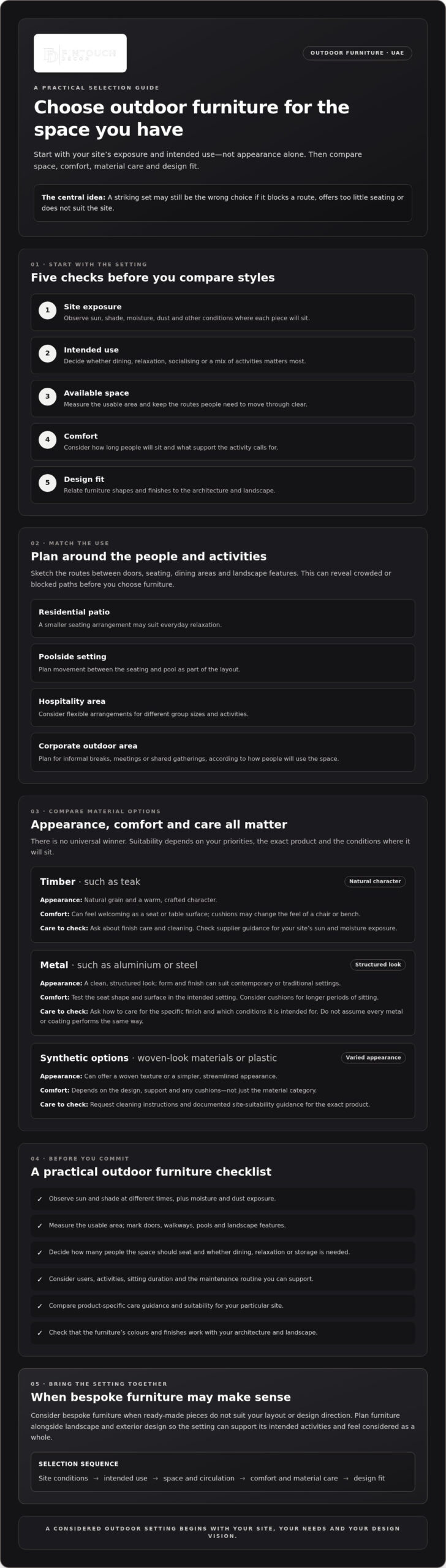
A Practical Outdoor Furniture Checklist Before You Commit
Before selecting outdoor furniture, check each option against the actual space and how you’ll use it. This helps you compare proposals consistently and catch practical gaps before approving a design.
- Recheck measurements. Compare each piece’s dimensions with your measured area, access routes, doors and planned circulation. Consider how furniture will be brought into the space, too.
- Define the users and activities. Confirm who will use the setting and whether it’s intended for dining, conversation, relaxation or several purposes. Check that each piece suits those activities.
- Review site exposure. Note where the furniture will sit and the conditions it will encounter, including sun, shade, moisture and dust. Ask the supplier to confirm the product’s suitability in writing.
- Assess comfort. Consider seat depth, back support and cushion handling. If possible, try the furniture in a position similar to how you expect to use it.
- Confirm materials and care. Request written details of the materials and finishes, along with cleaning instructions and guidance for maintaining the specific product.
- Check design fit. Compare form, colour and finish with your architecture and landscape. Make sure the furniture contributes to a coherent setting rather than competing with its surroundings.
- Coordinate project arrangements. Clarify any arrangements with the supplier and confirm access, placement and project coordination needs before you approve the proposal.
When does bespoke outdoor furniture make sense?
Bespoke furniture may be worth considering if standard pieces don’t fit the available dimensions, planned layout or design direction. Before approval, agree on the scope, materials, finishes and how the furniture will coordinate with the wider project. Fintouch Decor offers bespoke furniture; ask how a proposed design would address your specific brief and request confirmation of relevant product details in writing.
As you compare outdoor furniture dubai options, keep your measurements and priorities beside each proposal. For a tailored direction that responds to your layout and design requirements, discuss a tailored outdoor furniture direction for your project.
Plan a Cohesive Outdoor Setting with Fintouch Decor
A well-planned outdoor setting brings furniture, landscape and the way you use the space into a considered whole. Fintouch Decor offers outdoor furniture, bespoke furniture and landscape design, which can be considered together when your project calls for a coordinated approach. You may only need furniture, or you may want to connect it with wider landscape plans. The right scope depends on your brief.
How can furniture and landscape design work together?
Share how you intend to use the space, its dimensions and the visual direction you have in mind. These details help frame decisions about furniture placement alongside circulation and landscape elements such as planting, paths or shade. For example, a dining area may need a clear route from the home, while a seating arrangement might face a garden view.
Not every project needs a full landscape scope. You can focus on furniture selection alone, or consider landscape design where it fits your plans. The aim is to coordinate the elements you need without adding work that doesn’t serve the setting.
What information should you bring to an initial discussion?
A clear brief makes it easier to discuss design choices and practical needs. Prepare site photographs, measurements and reference images that show the look you’re considering. Add a short list of intended activities, such as dining, conversation or relaxation, and note how many people you expect to accommodate.
Also identify your preferences for care and comfort, along with where shade falls across the area. Ask which materials and custom options are available for your project, and request confirmation of relevant product details rather than assuming a specification applies. This gives you a clearer basis for comparing a standard selection with a bespoke solution.
Bespoke furniture can be useful when standard pieces don’t suit your dimensions, layout or design direction, but it isn’t essential for every space. Discuss the proposed scope, materials and finishes with Fintouch Decor, and confirm how the design will address your brief. If a Quality and Safety Certificate is presented, ask for details of its scope and validity before treating it as evidence relevant to your project.
Whether you’re sourcing outdoor furniture dubai options or coordinating furniture with a wider exterior plan, a clear brief helps keep function and design aligned. Explore a tailored outdoor space with Fintouch Decor.
Shape an Outdoor Setting That Feels Considered
Choosing outdoor furniture is a design decision as much as a practical one. Start with how you’ll use the space, assess its exposure and dimensions, then compare materials, comfort and care requirements against your needs. A cohesive layout should support easy movement and feel connected to the surrounding architecture and landscape.
For outdoor furniture dubai projects, a clear brief can help you compare ready-made pieces with bespoke options. Tailored furniture may suit a particular layout or design direction, but it isn’t necessary for every setting. Fintouch Decor offers outdoor furniture, bespoke furniture and landscape design. Consider which services fit your project and confirm the proposed scope and product details.
Bring your measurements, site photographs, intended activities and design references into the planning conversation. These details can help clarify which furniture and landscape elements are relevant to your space. Discuss your outdoor setting with Fintouch Decor and take the next step towards a space that feels comfortable, functional and distinctly yours.
Frequently Asked Questions
How do I choose outdoor furniture for a UAE home?
Begin with the setting and how you plan to use it. Measure the usable area and note its exposure to sun, moisture and dust, then compare each option’s comfort, care requirements and design fit. Ask suppliers for product-specific material details and documented maintenance guidance. The right choice depends on your site, preferred look and willingness to maintain the furniture, not appearance alone. This approach also helps you compare outdoor furniture dubai options against practical needs.
Which materials are suitable for outdoor furniture?
No single material suits every exterior setting. Compare timber, metal and synthetic options by appearance, comfort and care needs, then consider the conditions where each piece will be placed. Suitability can depend on specific product details and the site’s exposure. Ask suppliers for written product information and care guidance rather than relying on broad claims about weather resistance. This gives you a clearer basis for weighing style against upkeep.
Is bespoke outdoor furniture worth considering?
Bespoke outdoor furniture may suit your project when standard dimensions, layouts or design options don’t meet your requirements. It allows the brief to respond to the space and its intended use, but it isn’t necessary for every setting. First prepare your measurements, preferred style and practical priorities. Then ask the provider to clarify the proposed scope, materials and finishes, and how you’ll review and approve the design before production begins.
How do I measure an outdoor space for furniture?
Measure the usable floor area, then mark doors, access routes, pool edges, planting and other features that affect placement. Allow clear routes for people to move through the space, and account for how chairs or doors move during use. A simple sketch can help you compare possible arrangements. Before proceeding, check the selected furniture’s confirmed dimensions against your measurements and planned circulation, rather than relying on approximate product descriptions.
Can outdoor furniture suit both residential and commercial spaces?
Yes, but the selection should reflect how each space will be used. Consider who will use it, how often, which activities it needs to support and what care routine is available. An intimate residential seating area may call for a different arrangement from a hospitality setting or a corporate outdoor area. Match the furniture, layout and maintenance expectations to the project’s actual use, rather than assuming one arrangement fits every setting.
What should I ask an outdoor furniture supplier before choosing?
Ask for confirmed dimensions, material and finish details, product-specific care instructions and options that may suit your layout. Explain how you’ll use the space and describe its observed exposure to sun, moisture or dust. If you’re considering bespoke furniture, clarify the proposed scope, materials, finishes and approval process. Request written confirmation of relevant details so you can compare supplier proposals consistently and check that each option fits your project brief.
How can outdoor furniture complement landscape design?
Consider furniture placement alongside circulation, planting, shade, views and the exterior’s architectural features. A consistent palette can help connect furniture with the surrounding landscape, while thoughtful positioning can preserve routes and important sightlines. Let the furniture support your planned activities without overwhelming the setting. If your project includes wider landscape planning, discuss the furniture brief as part of that process so the elements can be considered together.