
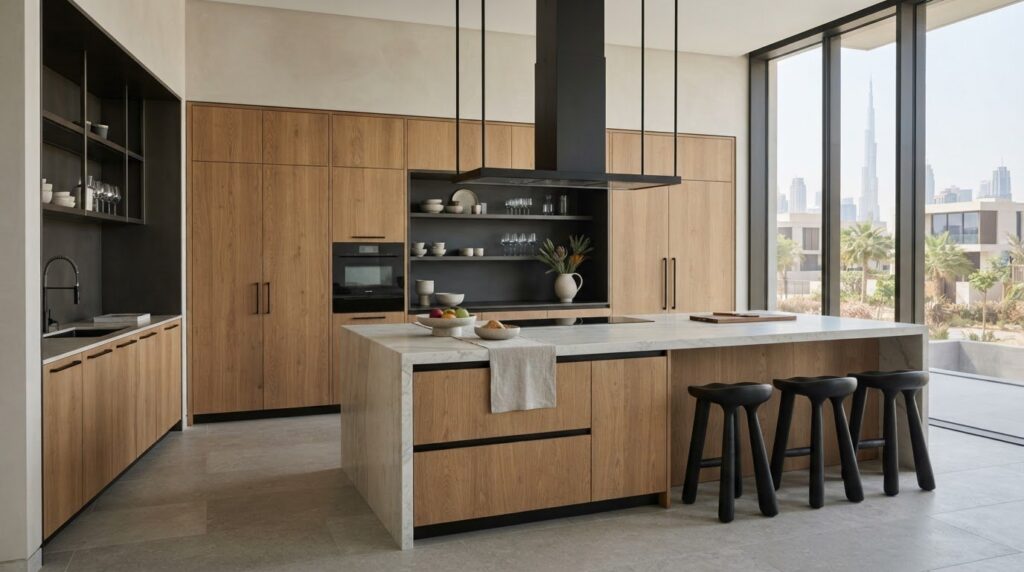
A coordinated cabinet set can bring visual harmony and practical storage together, so you don’t have to choose every unit in isolation. A well-planned Wooden Kitchen Cabinet arrangement combines complementary finishes with storage suited to how you use your kitchen.
Appearance matters: timber adds warmth, while colour and door style shape the room’s character. But a satisfying choice also considers how each cabinet works, from storing everyday cookware to making use of narrow or hard-to-reach spaces.
This guide explains how cabinet sets differ, which styles and colours can suit a modern kitchen, and how storage choices affect everyday use. You’ll also find practical guidance on caring for wood and choosing a tailored design that balances elegance, comfort and function in your UAE home.
Key Takeaways
- Choose a coordinated cabinet set to create a unified look, then tailor its layout to your kitchen’s dimensions and daily routines.
- Compare door profiles and finishes to find a style that complements your home, from clean-lined designs to more traditional details.
- Use colour thoughtfully: lighter finishes can keep a compact kitchen feeling open, while deeper tones bring definition and warmth.
- Match storage types to what you keep in the kitchen, making everyday items easy to reach and less frequently used pieces easier to put away.
- Consider the wood’s finish and care needs as part of your selection, and plan a tailored residential fit-out when you want cabinetry to work with the wider space.
Modern cabinet styles and designs
Choose a cabinet style by considering your kitchen’s architecture, daily routines and preferred finish. Rustic designs, classic profiles and modern slab doors create distinct effects, even when they use natural wood. Flat-front doors, for example, keep a contemporary kitchen visually calm, while framed doors add detail to a traditional interior. The best choice feels intentional alongside your flooring, worktop and lighting.
Rustic cabinetry often emphasizes visible grain, knots and textured finishes. Pairing warm wood doors with stone-effect surfaces can create a grounded look without making the room feel heavy. Classic cabinets take a more formal approach, with framed fronts, shaped edges or restrained moulding. Keep details consistent across drawers and doors so the overall scheme feels composed rather than crowded.
Modern designs favour clean lines and restrained detailing. A flat-front Wooden Kitchen Cabinet can suit an open-plan home, where visual simplicity helps connect the kitchen with living areas. Consider discreet handles or handle-free fronts, then balance the timber with a contrasting worktop. METOD is IKEA’s kitchen cabinet system; its style can be adapted through door fronts, colours and accessories. Check the system’s current components and dimensions against your room plan before designing around it.
Material selection also affects the finish. The Food and Agriculture Organization of the United Nations notes that high-end cabinet furniture uses solid timber rather than panel products for flat surfaces. Use that distinction when discussing a design: ask whether the visible surface should be solid timber, wood veneer or another finish. Each creates a different appearance, so choose according to your design priorities and care preferences.
Are permits or building approvals needed to replace kitchen cabinets in the UAE? Requirements depend on the property and the scope of work. Replacing cabinets alone differs from altering fixed services or the structure, so establish the applicable building approval process before work begins.
How do you measure a kitchen for new cabinets? Measure each wall, then record the ceiling height, doorways, windows and fixed features such as sinks. Mark appliance positions and service connections, and note the clearance needed for doors and drawers. A scaled plan helps turn those measurements into a practical cabinet layout.
What are the steps to install wooden kitchen cabinets? Plan the layout, prepare the walls, position and secure the cabinets, then fit the doors and hardware. Align the fronts and check that drawers and doors open freely. Follow the cabinet system’s instructions, keeping your measurement plan beside you throughout installation.
Which kitchen cabinet brands and suppliers serve the UAE? IKEA’s METOD system is one named option; bespoke joinery suppliers also serve homeowners looking for cabinetry tailored to a particular room. Compare the design approach, material descriptions and how each proposal uses your measurements. Focus on fit, finish and function rather than a brand name alone.
Cabinet storage, durability and maintenance
Storage planning should reflect what you keep, how often you cook and how you care for cabinet surfaces. In the UAE, consider heat, humidity and moisture exposure when selecting finishes and planning maintenance.
Storage Options and Uses
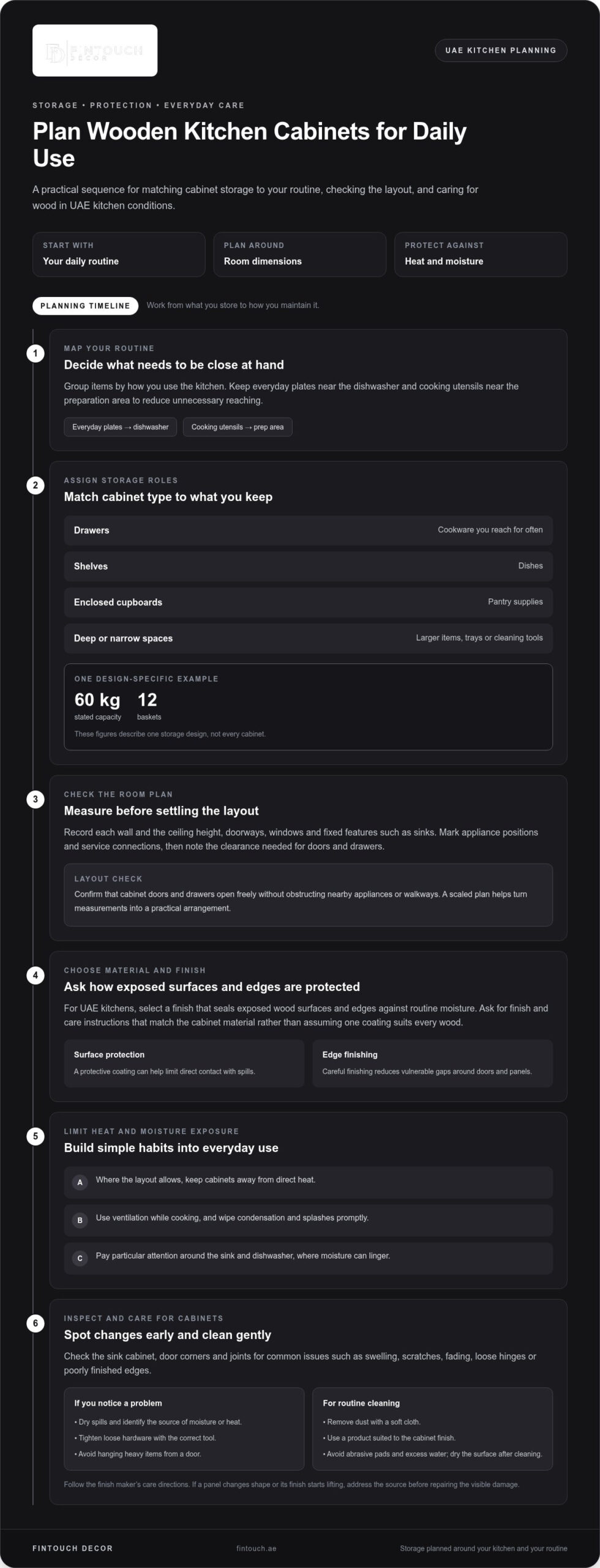
Assign each cabinet a clear purpose before choosing its position. Use drawers for cookware you reach for often, shelves for dishes, and enclosed cupboards for pantry supplies. Deep storage can hold larger items, while narrow spaces can suit trays or cleaning tools. One described kitchen storage design has a 60 kg capacity and 12 baskets; treat those figures as specific to that design, not every cabinet.
Group items by routine. Keep everyday plates near the dishwasher and cooking utensils near the preparation area. This reduces unnecessary reaching and helps you assess whether the layout suits your habits. Check that doors and drawers open without obstructing nearby appliances or walkways.
Finishes for Heat and Humidity
For UAE kitchens, choose a finish that seals exposed wood surfaces and edges against routine moisture. A protective coating can help limit direct contact with spills, while careful edge finishing reduces vulnerable gaps around doors and panels. Ask for the finish and care instructions to match the cabinet material, rather than assuming one coating suits every wood.
Where the layout allows, keep cabinets away from direct heat and use ventilation while cooking. Wipe condensation and splashes promptly, especially around the sink and dishwasher. These habits limit prolonged moisture exposure without relying on a particular finish to address every environmental condition.
Common Cabinet Problems and Risks
Common issues include swelling near persistent moisture, surface scratches, fading in strong sunlight and loose hinges after frequent use. Poorly finished edges can also let moisture reach exposed material. During routine cleaning, inspect the sink cabinet, door corners and joints, which often encounter water or repeated contact.
Address small problems early. Dry spills, tighten loose hardware with the correct tool and avoid hanging heavy items from a door. If a panel changes shape or its finish starts lifting, identify the source of moisture or heat before repairing it. Covering visible damage alone may leave the cause in place.
For routine care, remove dust with a soft cloth and clean marks with a product suited to the cabinet finish. Avoid abrasive pads and excess water, which can scratch coatings or seep into joints. Dry the surface after cleaning and follow the finish maker’s care directions. Regular checks help you spot changes before they affect everyday use.
Plan storage, surface protection and cleaning together for a more considered kitchen. If tailored furniture planning would help coordinate cabinetry with the rest of your interior, explore bespoke furniture design.
Colour choices for bright or darker kitchens
Cabinet colour affects how timber, worktops and surrounding surfaces look together. Start with the kitchen’s natural light, then compare sample finishes beside fixed elements such as a marble-effect counter or tiled floor. In a bright room, contrast can define the cabinetry; in a darker room, lighter fronts can soften the overall effect.
In a sunlit kitchen, consider medium or deeper wood tones to add visual weight without competing with daylight. A walnut-coloured finish beside pale stone-look counters creates a clear distinction between surfaces. If the floor has a strong grain, choose quieter cabinet fronts to avoid a busy look. A simple handle finish can connect the cabinetry with taps or appliances.
In a kitchen with limited daylight, pale oak tones, warm beige or soft white can help the room feel more open. Pair light cabinet fronts with a slightly darker worktop to define the preparation area. Avoid matching every surface exactly. A white cabinet, cream wall and pale counter, for example, can blur together unless wood grain or hardware adds contrast.
Wood tones also have undertones that influence the palette. Honey-toned timber can complement warm cream walls, while cooler brown finishes sit comfortably beside grey stone. A reddish wood stain may stand out against blue-grey tile, so test the combination first. Treat the grain as part of the colour: pronounced grain adds pattern, while an even finish gives neighbouring details more prominence.
Use a practical sequence to bring the palette together:
- Keep existing fixed surfaces, such as the floor and backsplash, as your starting point.
- Choose a cabinet sample that either complements or deliberately contrasts with those surfaces.
- Pair that sample with the worktop, wall colour and visible hardware.
- Review the group under the kitchen’s installed lighting and available daylight.
Lighting can change how a finish appears. Warm ceiling lights may bring out golden notes in oak, while cooler lighting can make the same finish seem more muted. Compare samples near the window and beneath the lights used at night. Check how the cabinet colour relates to stainless-steel appliances too, as their reflective surfaces can affect how nearby tones appear.
Before making a final selection, view a larger sample than a small colour chip whenever possible. Place it beside the backsplash, floor and worktop, then view the combination from the doorway and preparation area. This can reveal whether a dark island overwhelms a compact layout or pale cabinets need a contrasting edge. Choose a palette that feels balanced in daylight and evening light.
Kitchen cabinet types and storage uses
Cabinet type determines where your kitchen stores dishes, cookware and pantry goods. Match each unit to a task, such as keeping cooking utensils beside the preparation surface or storing serving dishes above it.
Solid wood uses natural timber throughout the cabinet component, while plywood consists of bonded wood layers. MDF, or medium-density fibreboard, is made from compressed wood fibres; veneer is a thin wood layer applied over a supporting substrate. These terms describe different materials or constructions, so compare the cabinet body and visible finish separately.
Wood cabinets bring natural grain and can be refinished, while laminate uses a decorative surface over a core material. Aluminium cabinets have a metal construction and a distinct, more industrial appearance. Choose by considering the look you want, the kitchen’s moisture exposure, maintenance preferences and how the cabinet will be used.
Base cabinets sit below the worktop and suit heavy cookware, pots and pans. Drawer units keep cutlery and utensils visible, while deeper drawers can hold mixing bowls. Wall cabinets make use of vertical space for glasses, mugs or everyday plates. Keep frequently used items within comfortable reach and place occasional-use pieces higher.
Tall cabinets can provide pantry storage or hold larger kitchen items, depending on their internal layout. Corner cabinets use the space where two runs meet; shelves or pull-out fittings can make stored objects easier to reach. Measure the available opening and consider nearby door movement before choosing a corner solution. A narrow cabinet can also hold trays, chopping boards or cleaning supplies.
- Base drawers: Group cutlery, cookware or food containers by task.
- Wall units: Store daily dishes and glasses near the dining or washing area.
- Tall cupboards: Organize pantry goods or larger equipment on shelves.
- Corner units: Keep less-used cookware accessible without blocking adjacent cabinets.
- Open shelving: Display frequently used items, such as serving bowls, while keeping them easy to reach.
Plan the layout around the objects you own, not cabinet labels alone. Measure your largest pot, appliance or serving tray, then assign a suitable shelf or drawer. Baking trays, for example, fit well in a vertical divider near the oven, while mugs suit a wall cabinet near the kettle. This simple inventory helps prevent wasted space and awkward storage.
Consider the cabinet interior as carefully as its exterior. Adjustable shelves can accommodate changing needs, while dedicated dividers keep lids and trays upright. Check that drawers clear appliance handles and open doors don’t obstruct the main walkway. These details help the cabinets support everyday cooking, not just the room’s appearance.
Adjustable interiors can accommodate items of different sizes, so check shelf positions and clearances against what you plan to store. A narrow sideboard may suit a compact area where a full-size cabinet would be difficult to place. Compare the unit’s dimensions and storage arrangement with the available space before deciding whether it fits your kitchen.
The page advertises a 36 Month warranty for the kitchen storage cabinets. These details can help when comparing storage options, alongside the cabinet’s capacity, construction and suitability for the items you need to keep close at hand.
What types of wood are best for kitchen cabinets in the UAE?
The right wood depends on the cabinet’s construction, finish and position in your kitchen. In the UAE, consider indoor temperature changes, cooking moisture and how much maintenance you prefer. Choose a material for its appearance and intended use, then assess whether its finish protects exposed faces and edges.
Oak has visible grain that suits natural or stained finishes. Maple has subtler grain for a more restrained look, while walnut brings deeper brown tones. These species differ in colour and grain, so compare samples beside your worktop and flooring. Ask whether the cabinet uses solid wood throughout or combines timber with other materials.
Solid wood has natural grain and can be shaped or refinished, but changes in humidity can affect timber. Plywood consists of bonded wood layers and is often used when a layered panel construction is wanted. MDF uses compressed wood fibres, while veneer provides a thin wood surface over a supporting substrate. The visible wood surface alone doesn’t identify the cabinet’s core.
For a kitchen exposed to frequent spills or steam, consider construction and finishing alongside the wood species. Sealed surfaces and carefully finished edges help shield materials from routine moisture. The Food and Agriculture Organization of the United Nations identifies poorly finished, unseasoned, untreated and ungraded wood products as factors that can undermine acceptance of wood in housing. This makes preparation and finish quality worth examining.
- Oak: Consider it when you want pronounced grain and a natural timber appearance.
- Maple: Choose it for a more even, understated grain.
- Walnut: Use it to introduce a deeper wood tone into the scheme.
- Veneered panels: Consider them when a wood surface is preferred over solid timber throughout.
Before selecting a material, decide which surfaces need to be solid timber and where panel construction suits the design. Inspect a sample’s edges, finish and grain, then compare them with the cabinet’s intended location. A sink-side door, for example, faces different moisture exposure from an upper cupboard away from cooking and washing areas.
Ask for clear material descriptions and care guidance for the finished cabinet. That lets you compare timber species, panel construction and protective treatments on equal terms. To develop a kitchen scheme around your preferred wood and finish, plan a tailored furniture design that suits your space.
Fintouch Decor: Residential Fit-out
Fintouch Decor’s Residential Fit-Outs & Decorations service is a natural next step when a kitchen update involves cabinetry and the surrounding interior. A considered fit-out can bring cabinet placement, finishes and the room’s broader design into one coordinated plan, balancing everyday function with the look of your home.
Choose this service when planning a renovation or when you want new cabinetry to feel connected to adjacent living spaces. Fintouch Decor also offers Corporate Fit-Outs & Decorations, Landscape Fit-Outs & Decorations and bespoke furniture, while a residential kitchen project calls for a solution shaped around your home and routines.
Contact Fintouch Decor to discuss your residential fit-out and kitchen plans.
Shape a kitchen that feels distinctly yours
Your kitchen should support the way you live while expressing your personal style. Treat a wooden kitchen cabinet set as part of a wider design vision, considering its proportions, finish and placement alongside connected spaces. A thoughtful plan can help your kitchen feel purposeful rather than assembled from separate choices.
Fintouch Decor offers Residential Fit-Outs & Decorations for home projects, alongside Corporate Fit-Outs & Decorations and Landscape Fit-Outs & Decorations. These services can support broader plans for interiors and outdoor spaces, while a residential fit-out is a natural direction for a home renovation.
Take the next step by sharing your ideas and the way you want your kitchen to function. Contact Fintouch Decor to discuss your project and begin shaping a space that reflects your home.
Frequently Asked Questions
Why shop each cabinet separately when you can go for a complete cabinet set?
A complete set can make selection more straightforward, while buying units separately gives you more flexibility to replace only what you need. For a phased renovation, individual cabinets may let you retain usable existing units. A set is often a practical starting point when furnishing an entire kitchen at once. Compare both approaches with your renovation scope and whether existing cabinetry will remain.
How do you clean and maintain wooden kitchen cabinets?
Empty one cupboard at a time, then remove shelf liners and crumbs before returning items. Clean handles and knobs separately, since frequent hand contact leaves marks. Check shelf supports and drawer runners for loose fittings as you clean. Put back only dry dishes and containers, and store cleaning products away from food and cookware.
How long do wooden kitchen cabinets last?
There’s no universal lifespan for every cabinet, so assess its condition rather than relying on a fixed year count. Check whether the cabinet body remains secure, doors sit square and joints hold firmly. If the carcass is sound but a door or handle is worn, targeted repairs may be enough. If several structural parts have failed, broader replacement may make more sense.