
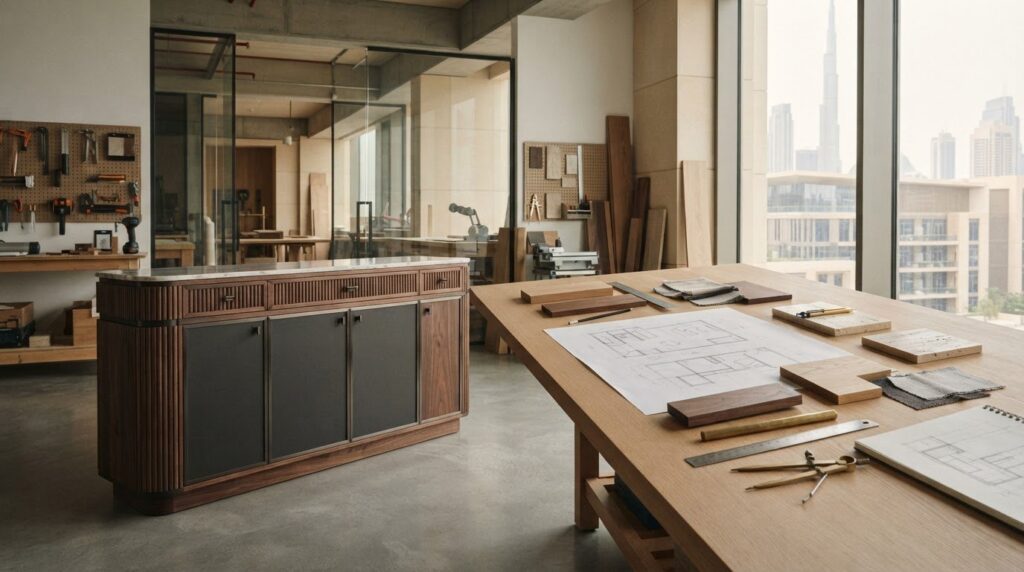
A beautiful piece of furniture can still be wrong for your room. It may narrow a walkway, leave you short of storage or compete with the finishes you’ve chosen. Bespoke furniture design and manufacturing starts with a practical question: what should this piece do, and how should it fit your space? If you’re comparing custom furniture with ready-made options, consider both the freedom of a tailored design and the details needed to make it work day to day.
This guide follows the process from your initial brief to the finished piece. You’ll see how decisions about purpose, measurements, materials and finish affect function and appearance, and what to review before production begins. With in-house manufacturing, the design and making of a piece remain connected. Whether you’re planning a residential, corporate, hospitality or retail space in the UAE, a clear brief helps you assess how well bespoke furniture can meet your needs for comfort, durability and visual harmony.
Key Takeaways
- Bespoke furniture is designed around your space, needs and preferred details. Ready-made pieces may suit you when standard options already fit.
- A clear brief guides bespoke furniture design and manufacturing, from purpose and dimensions to production and final placement.
- Compare custom and ready-made furniture by looking at fit, flexibility, coordination and everyday use.
- Plan dimensions, placement and finishes alongside lighting, circulation and joinery for a more cohesive interior.
- Fintouch Decor’s in-house manufacturing connects tailored furniture designs with production as part of a wider fit-out project.
What Bespoke Furniture Design and Manufacturing Means for Your Space
A furniture piece can look refined in a showroom and still feel awkward in your room. Its depth may obstruct a walkway, its storage may not suit what you need close at hand, or its proportions may compete with nearby features. Bespoke design begins with these practical conditions, then shapes a piece to suit both the space and its visual character.
Bespoke furniture design and manufacturing is the process of planning and making furniture around a specific space, purpose and set of user needs, with dimensions and details shaped for that brief. It goes beyond choosing a colour or finish from a limited catalogue. The design considers how you’ll use the furniture, where it will sit and how it should relate to the wider interior. For the meaning and history of the term, see the meaning and history of bespoke.
Ready-made furniture can be a practical choice when its dimensions, finishes and function suit your room and routine. Bespoke design gives you more scope to shape fit, storage, seating and coordination around a particular brief. Neither option is right for every project. Ask whether a standard piece meets your needs comfortably or whether a tailored design would make the room work better.
What makes furniture truly bespoke?
A tailored brief accounts for the room’s measurements, the furniture’s placement and how you expect to use it. A storage unit, for example, might need to fit a particular wall and organise items you use every day. Seating should suit its setting and allow enough room to move around it. Dimensions, storage and comfort matter alongside shape, finish and proportion.
A standard item offered in several colours provides a limited set of choices. A bespoke design is developed around the requirements of your space and its intended use. This lets practical needs and aesthetic choices inform one another from the beginning.
Where bespoke furniture can make a difference
At home, tailored furniture can respond to a particular wall, room layout or storage need. In hospitality, seating and tables can be planned around how guests move through and use the space. Retail furniture can support product display and customer circulation, while workplace pieces can suit the tasks and layout of an office.
In every setting, fit and function deserve as much attention as appearance. A striking piece should feel at home, keep routes clear and serve its intended purpose. Furniture also relates to surrounding joinery and finishes; the article Bespoke Furniture and Luxury Joinery Manufacturers explores that connection. Planning these elements together helps individual pieces feel intentional rather than added as an afterthought.
How Bespoke Furniture Moves from Design Brief to Manufacturing
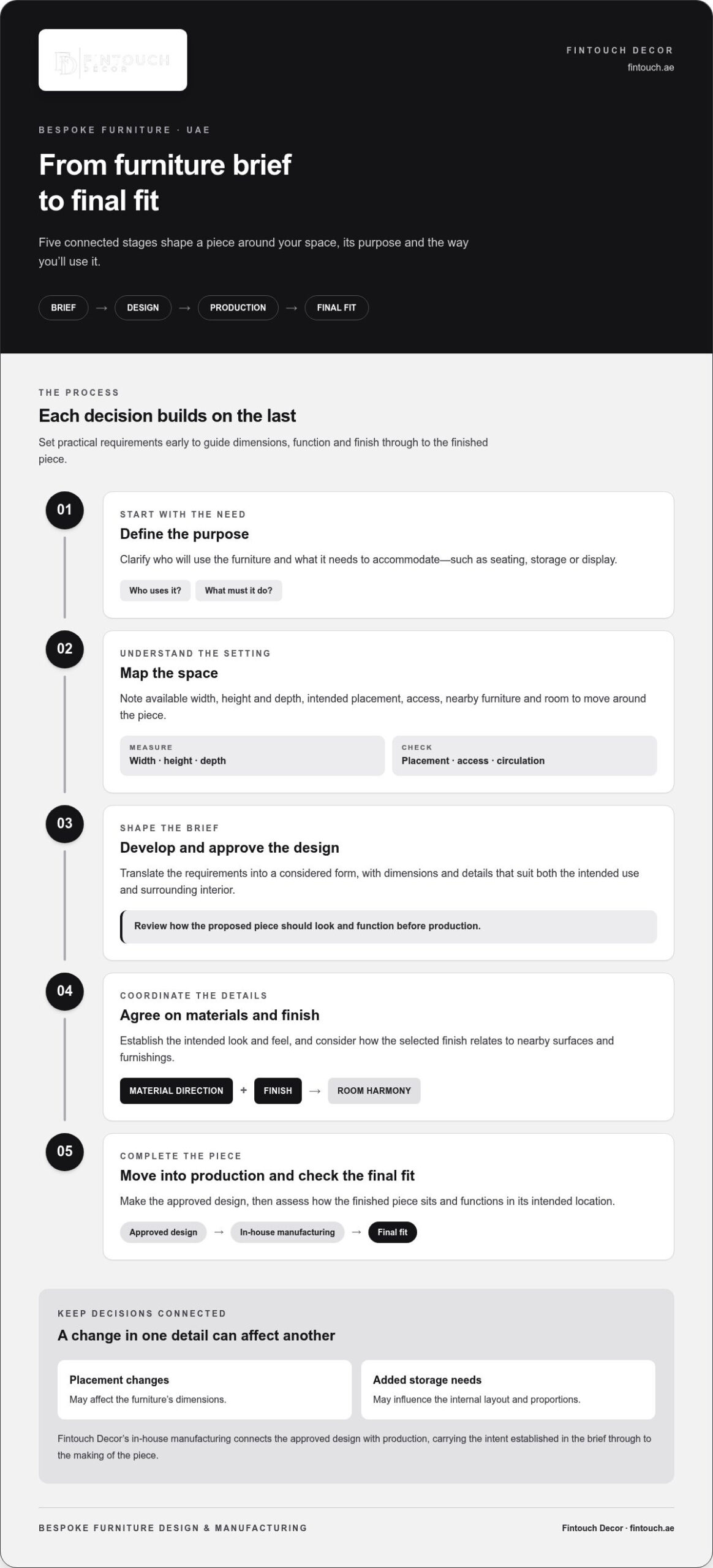
A successful piece takes shape through connected decisions. The brief establishes what the furniture must do. Design translates those needs into form and detail, production turns the approved design into a physical piece, and final fitting checks how it works in its intended space. Settling practical requirements early makes it easier to make consistent decisions about dimensions, function and finish.
The bespoke furniture process moves from defining your needs and measuring the space to developing and approving the design, manufacturing the piece, and checking its final fit. Each stage builds on the last. A change to a functional requirement can affect the appearance, materials or way the furniture works in the room.
Building a furniture brief around use and space
Start by identifying who will use the piece, what activities it needs to support and where it will go. Record key dimensions, nearby furniture, circulation routes and any architectural features that affect its position. Photos and visual references can help communicate your preferred mood, shapes and finishes, but pair them with clear functional requirements.
- Define the purpose. Clarify who will use the furniture and what it needs to accommodate, such as seating, storage or display.
- Map the space. Note the available width, height and depth, the intended placement, access and the room needed to move around the piece.
- Develop the design. Translate the brief into a considered form, with dimensions and details that respond to both use and the surrounding interior.
- Agree on materials and finish. Establish the intended look and feel, and how the selected finish relates to nearby surfaces and furnishings.
- Move into production and final fit. Make the approved design, then assess how the finished piece sits and functions in its intended location.
From design decisions to in-house manufacturing
Before production, design development brings the main choices into focus: overall form, dimensions, material direction and finish. These decisions give you a clear basis for reviewing how the furniture should look and function. Fintouch Decor’s in-house manufacturing connects the approved design with its production, carrying the intent established in the brief through to the making of the piece.
Agreeing on purpose, measurements and finish early helps keep later decisions consistent. A change in placement, for example, may affect dimensions. An additional storage need may influence the internal layout and the piece’s proportions. These details matter because furniture has to work in context, not only in a drawing or reference image. The Bureau of Labor Statistics overview of furniture manufacturing provides broader context on the industry and its production processes.
For a project where furniture is part of a wider interior vision, Fintouch Decor’s bespoke furniture solutions bring design and in-house manufacturing together around your brief.
Bespoke vs Ready-Made Furniture: Compare Fit, Flexibility and Use
The right choice depends on your room and routine. Ready-made furniture can be a straightforward fit when standard dimensions, available finishes and intended use suit your space. Bespoke design gives you more scope to shape those details around the room. Semi-custom options sit between the two, typically offering a selection of set dimensions or finishes rather than a design developed entirely for one brief.
Use this comparison to identify where flexibility matters most. Bespoke furniture design and manufacturing can address specific spatial or functional requirements, but a tailored piece is not automatically the right choice for every project.
| Consideration | Bespoke furniture | Ready-made furniture |
|---|---|---|
| Fit | Dimensions and placement can be developed around room constraints and how the piece will sit in context. | Standard dimensions work well when they suit the available space and leave comfortable room for movement. |
| Choice | Form, details and finish can respond to a specific brief and design direction. | Choice is drawn from available designs, sizes and finishes. |
| Coordination | The design can be considered alongside surrounding joinery, furnishings and interior finishes. | Coordination depends on how available options relate to the existing scheme. |
| Use | Storage, seating or work-surface requirements can inform the design from the outset. | The piece’s intended use is set by its existing design, so check that it supports your needs. |
When tailored dimensions and details matter most
Tailored dimensions can help when a room has an awkward corner, a narrow passage or a wall that needs a carefully proportioned piece. They can also be useful when standard storage layouts don’t suit what you need to organise, or when a work surface must support a particular activity. For display furniture, consider what needs to be seen and how people will approach it.
For a coordinated interior, plan the furniture alongside the rest of the scheme. A piece placed near built-in joinery, for example, may need carefully considered proportions and a finish that relates to nearby surfaces. The more elements a project involves, the more useful it is to plan furniture as part of the overall design instead of treating it as a separate purchase.
How to assess materials, finish and durability
Compare materials by considering the look you want, the care they may require and the demands of the furniture’s intended use. Solid wood, veneer, MDF and upholstery are general examples, not specifications for a particular design. Their suitability depends on the piece, its construction and its finish. A frequently used surface may need different care from a decorative feature.
Before deciding, consider how a material will look and feel in the room, how it relates to surrounding finishes and what everyday care it may need. Choose the option that fits your space, function, design priorities and project scope, rather than assuming bespoke or ready-made furniture is always the better choice.
How to Plan Bespoke Furniture for a Cohesive Interior
A well-planned furniture piece should feel at home in its room, support how you use the space and relate to the wider design scheme. Consider these elements together from the start. If a furniture plan overlooks lighting, circulation or joinery, the result can feel disconnected or make everyday movement less comfortable.
Aligning furniture with the room and its users
Start with the people who use the space and the activities it needs to support. A lounge, reception area and workplace each have different requirements for comfort, access and use. Room proportions matter too: a piece should feel in scale with its surroundings and leave practical routes clear.
Use this checklist to shape your planning:
- Use: Identify who will use the furniture, how often and for what activities.
- Dimensions: Record the available space and the proportions of nearby furnishings or architectural features.
- Movement: Consider how people enter, pass through and use the room, including access to doors and storage.
- Placement: Decide where the piece belongs and how its position relates to windows, lighting and other focal points.
- Finish: Note the colours, textures and materials already present, then consider how the furniture should complement them.
- Coordination: Review the furniture alongside joinery, lighting and surrounding finishes so the overall scheme feels intentional.
Comfort and visual harmony can reinforce each other. Appropriate proportions can make a seating area feel inviting while preserving clear circulation. Thoughtful placement can also help a work surface receive useful light without interrupting the room’s flow.
Coordinating furniture with fit-out and joinery
Furniture decisions are easier to coordinate when they’re considered alongside the wider interior. Dimensions can affect nearby joinery, while finishes influence how a piece relates to wall treatments, flooring and other surfaces. Fintouch Decor’s fit-out, decor and joinery solutions help bring these elements into the same project plan, so furniture can relate to surrounding features and finishes.
If you’re planning a workplace, Best Office Interior Design: A Practical Guide to Better Workspaces offers related reading on the wider design context. For a residential project, consider how furniture choices can support the home’s overall design direction and everyday needs. Both settings benefit from aligning furnishings with the character and function of the space.
With bespoke furniture design and manufacturing, the brief can connect the room, its users and its finishes. Fintouch Decor’s bespoke project approach brings these considerations together when planning a cohesive interior.
Bespoke Furniture Design and Manufacturing with Fintouch Decor
A furniture piece can shape how a room feels and how well it serves its purpose. Fintouch Decor provides bespoke furniture design and in-house manufacturing, with each project shaped by its function, aesthetic direction and spatial requirements. The process begins with what your space needs, then considers how the furniture can contribute to its character and everyday use.
This approach suits residential, corporate, hospitality, retail and healthcare settings. A home, workplace or customer-facing environment has different priorities for comfort, access, storage and presentation. Bespoke furniture brings those requirements into the design process, rather than asking the space to adapt to a standard piece.
Designing furniture as part of a wider space
Furniture works best when it relates to the interior around it. Its proportions, placement and finish can complement the room’s character while meeting practical needs. Fintouch Decor’s design consultancy, decor, fit-out and joinery solutions help connect these decisions to the wider project, so furniture can be planned in relation to surrounding features and finishes.
That connection matters whether you’re shaping a calm residential interior, a welcoming hospitality setting, a considered retail environment or a functional workplace. The brief can account for how people use the space, how the furniture supports those activities and how each piece contributes to a coherent visual style. The aim is not simply to add an object, but to make a considered design choice that belongs in its setting.
Craftsmanship, quality and a considered next step
Fintouch Decor’s in-house bespoke furniture manufacturing connects furniture design with production within the company. The brief guides the details, keeping intended use and design direction central to the work. Material selection, construction and finish can then be considered in relation to the piece’s requirements.
As you plan, consider what the furniture must do, how it should feel in the room and which details matter to the wider interior. Clear priorities help guide design decisions and make it easier to assess whether a concept reflects your needs. Fintouch Decor’s bespoke furniture can also be planned within residential, corporate, hospitality and retail fit-out projects, bringing the furniture brief into the wider conversation about your space.
Ready to shape a more personal interior? Discuss your tailored furniture or fit-out project with Fintouch Decor and take the next step towards a space that brings function, comfort and style together.
Shape a Space That Reflects Your Vision
Your first step is to decide what you want your space to express. Whether you’re refining one room or shaping an entire interior, consider the feeling you want to return to each day: calm, welcome, focus or a stronger sense of occasion. Let that intention guide your choices, while leaving room for the personal details that make the space distinctly yours.
Thoughtful design is about more than what stands out. It’s also about how a room supports the moments that matter, from quiet routines to shared experiences. A considered approach to bespoke furniture design and manufacturing can give your vision a tangible presence, shaped around your priorities rather than a passing trend. Keep the bigger picture in view: one well-planned piece can set a tone and help an interior feel more personal.
Imagine how tailored furniture could change the way you experience your home or workplace. Transform your space with furniture designed around your vision, and take the next step towards an interior that feels unmistakably yours.
Frequently Asked Questions
What is bespoke furniture design and manufacturing?
Bespoke furniture design and manufacturing creates a piece around a particular brief instead of selecting standard catalogue dimensions and details. The brief may reflect room constraints, intended use, preferred appearance and how the furniture relates to its surroundings. For example, a dining table can be planned around the room’s proportions and how you host, with its shape and finish considered as part of the design.
How does the bespoke furniture process work?
The process generally begins by clarifying the piece’s purpose and the conditions in which it will be used. Measurements and preferences inform design development, followed by decisions about form, materials and finish. Once approved, the design moves into production and the finished piece is assessed in its intended setting. Keep a record of key decisions so details such as access, storage and surface care carry through each stage.
Is bespoke furniture better than ready-made furniture?
Not in every situation. Ready-made furniture may suit you if its dimensions, function and available finish work with your room and preferences. Bespoke design is worth considering when a particular layout or use calls for more tailored decisions. Semi-custom furniture may provide a middle ground, with selected options within an existing design. Compare each route against your actual requirements instead of assuming custom work is automatically more durable or suitable.
What should I consider when designing custom furniture?
Think beyond appearance. Consider who will use the piece, what it needs to hold or support, and how people will approach and move around it. Check practical details such as door swings, access to nearby storage and whether cleaning around or beneath the furniture will be easy. Then weigh these needs against the look you want, so the design feels considered without making everyday tasks less convenient.
Which materials are used for bespoke furniture?
Material choices vary with the design and its intended use. Options may include timber, wood-based panels, metal, glass or upholstered surfaces, with different finishes affecting appearance and care. Review samples in the room’s lighting, and consider how exposed edges, joins and frequently touched areas may look over time. Choose materials and finishes that suit the piece’s purpose and the level of cleaning or maintenance you’re comfortable with.
Can bespoke furniture be designed for commercial spaces?
Yes. Tailored furniture can be planned for commercial settings such as reception areas, hospitality venues, retail displays and workplaces. A reception desk, for instance, may need to support staff tasks while giving visitors a clear point of arrival. For customer-facing furniture, consider expected use, ease of movement and cleaning requirements alongside the intended visual impression. The brief should reflect the activities taking place in that specific environment.
How does in-house manufacturing relate to furniture quality?
In-house manufacturing means furniture is produced within the same company rather than outsourced. It keeps design and production connected, making it easier to carry intended details through the making process. The phrase alone does not establish a particular quality level or guarantee a result. Quality also depends on decisions such as material suitability, construction details, finish and how carefully the approved design is followed.
Can bespoke furniture be coordinated with an interior fit-out?
Yes. Furniture can be planned alongside fit-out choices so its proportions, placement and finishes work with the room’s fixed elements. For example, a desk’s position may need to account for lighting, power access and circulation, while a storage piece can be considered alongside nearby joinery. Reviewing these relationships early helps connect the furniture to the wider design instead of treating it as a late addition.