
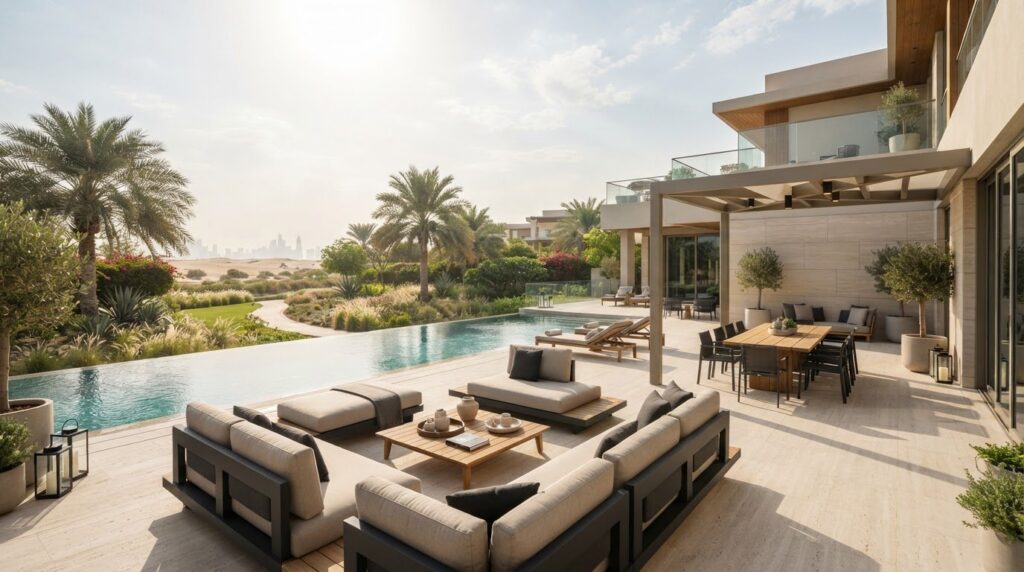
A well-designed outdoor area begins with one decision: treat outdoor furniture as part of the landscape, not a finishing touch. In the UAE, strong sun, heat, humidity and airborne dust can affect how materials age and how much care they need. Durability matters, but so do comfort, circulation and a layout that feels connected to your property.
Whether you’re furnishing a compact balcony, a shaded terrace or a garden made for hosting, choose pieces that suit the available space and the way you’ll use it. Measure before you buy, and make sure furniture won’t crowd pathways or block access. Ready-made options can be practical, but unusual dimensions or a specific design vision may call for a more tailored solution.
This guide will help you plan outdoor furniture around your space, intended use and UAE conditions. You’ll find practical ways to compare materials, balance lounging and dining, and decide when bespoke design makes sense. Fintouch Decor brings together landscape design and outdoor furniture, with bespoke solutions supported by in-house manufacturing, to help you create a cohesive and comfortable setting that feels distinctly yours.
Key Takeaways
- Start with the activities your outdoor area needs to support, from relaxed lounging to dining and entertaining.
- Choose outdoor furniture materials according to sun and weather exposure, intended use and the care routine you can maintain.
- Ready-made pieces can suit straightforward layouts, while bespoke furniture gives you more control over fit and design.
- Measure your space, map activity zones and plan access before deciding where furniture will go.
- Landscape design and in-house manufacturing can help bring tailored furniture into a cohesive outdoor scheme.
Outdoor Furniture in the UAE: Start with How You Want to Use the Space
Furniture influences more than comfort. Its position can make an outdoor setting feel sociable, create a quiet retreat or leave the space awkward to move through. Before choosing pieces, decide what the area needs to do on an ordinary day and when you host. A clear purpose helps you plan a layout that supports your routine and complements your property.
A practical outdoor furniture layout reflects how you use the space, the area available and the routes people need to move through it. Apply that principle to each zone, from the position of a dining table to the view from a lounge seat.
Match furniture zones to everyday activities
For dining, arrange the table and seating so people can sit down and move around without obstructing a doorway. In a lounging area, position seats for conversation or relaxation. If you entertain, plan flexible seating that brings people together without blocking access to other features.
Consider who uses the area and how often. If you dine outdoors regularly, plan a convenient route between the kitchen and table. For a quiet retreat, a smaller seating arrangement can leave more room for planting or open views. For occasional gatherings, trace how guests will move between seats, serving areas and the rest of the garden.
Map the routes before finalising furniture positions. Trace the usual path from doors to seating and onward to features such as planting beds or a pool. A clear route makes the setting easier to use and helps prevent furniture from becoming an obstacle. Reference material on common furniture forms and materials can help you explore different categories, but your arrangement should reflect your activities and site.
Plan around the proportions of your outdoor space
Measure the usable area before selecting furniture. Note fixed elements, door openings, changes in level and landscape features that limit placement. Mark them on a simple plan, then add the dimensions of potential pieces. This makes it easier to see whether an arrangement leaves enough room to move and use the furniture.
Scale matters. Oversized pieces can dominate a compact terrace, while furniture that is too small may look disconnected in a generous garden. Balance seating with open floor area and the surrounding architecture. Plan room to approach seats and use tables, not just space for the furniture’s footprint.
Each setting has different constraints. A patio layout should respect its boundaries and nearby entrances. In a garden, relate furniture to planting, pathways and views. Poolside placement should keep access clear, while a terrace may need to work around exposed edges, doors and built-in features. Measuring first helps you create a setting that feels composed and easy to use.
How to Choose Outdoor Furniture Materials for UAE Conditions
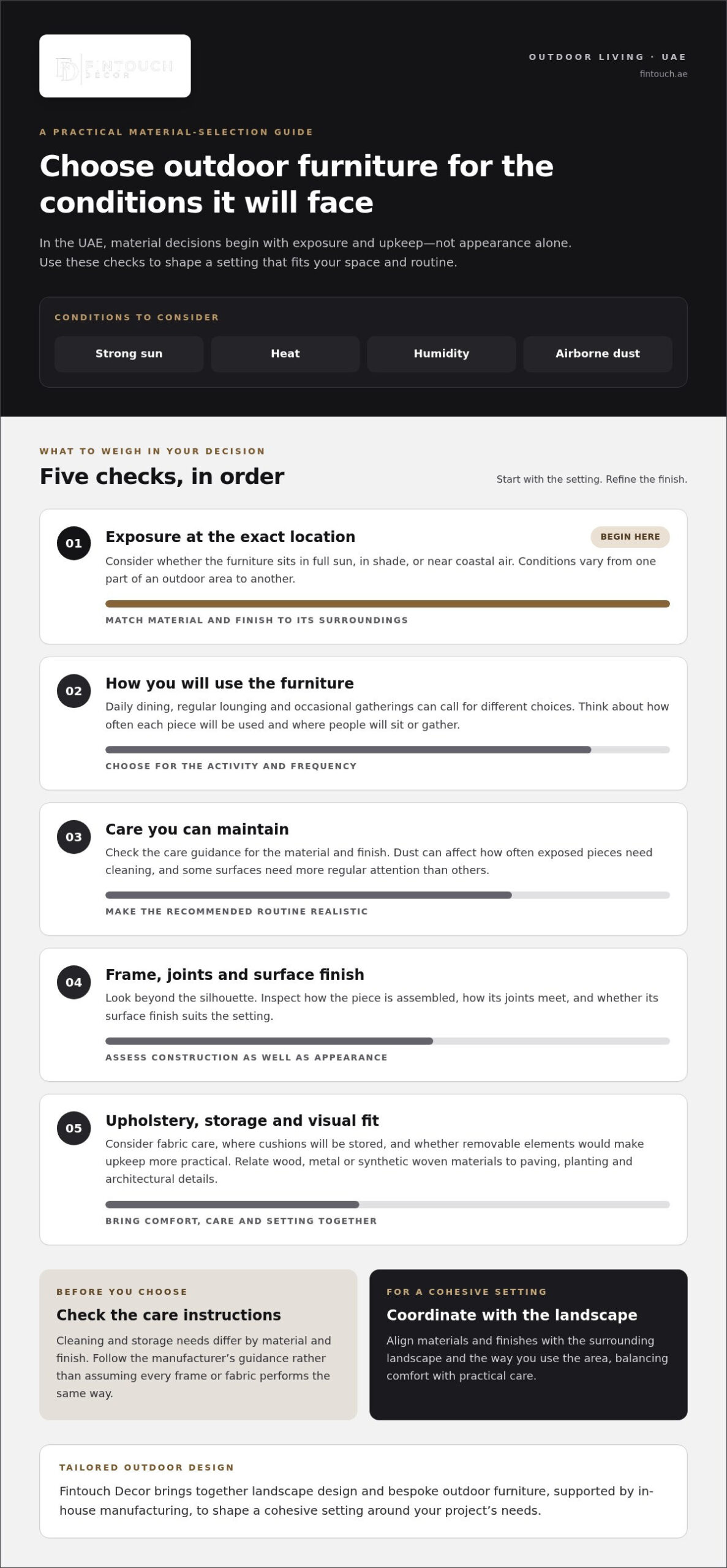
A material that suits a shaded seating area may not be right for furniture exposed to full sun or coastal air. Across the UAE, sunlight, heat, humidity and dust can affect how a piece looks and how much attention it needs. Consider the exact location, how you’ll use the furniture and the care you’re prepared to give it.
Choose materials according to their exposure and your maintenance needs, not appearance alone. This helps you compare options in practical terms while keeping the design aligned with your landscape and property.
Compare frames, surfaces, and finishes
Look closely at how each piece is assembled, not just its silhouette. Check the frame, the way joints meet and whether the surface finish suits the setting. Wood, metal and synthetic woven materials create different visual effects. Consider how each option relates to paving, planting and architectural details rather than assuming one material is right for every outdoor area.
Review the care guidance for each material and finish before choosing. A surface that needs regular attention may not suit a busy entertaining area if you prefer a low-maintenance routine. Dust can also affect how often exposed pieces need cleaning. Finishes influence the appearance, from natural texture to a more uniform look, but shouldn’t be treated as a promise of a particular lifespan.
Choose upholstery and accessories with upkeep in mind
Cushions and fabric details affect both comfort and the time needed for care. Consider whether seats will be used daily, during gatherings or only occasionally, and how exposed they are to sun, humidity and dust. Decide where you’ll store cushions when they’re not in use, and check whether the fabric’s care routine suits your household. Removable elements can make upkeep more practical.
Follow the manufacturer’s instructions for cleaning and storage, since care requirements differ by material and finish. Before choosing, make sure the recommended routine is realistic for your household. This helps you maintain the appearance of your outdoor setting without relying on assumptions about how every fabric or frame will perform.
For a cohesive result, coordinate the material palette with the surrounding landscape and the way you use the area. Fintouch Decor brings together landscape design and bespoke outdoor furniture, supported by in-house manufacturing. Explore tailored outdoor furniture design shaped around your project’s needs. Thoughtful selection can unite comfort, practical care and a refined exterior aesthetic.
Ready-Made or Bespoke Outdoor Furniture: Compare the Right Fit
There isn’t one right option for every outdoor setting. Standard catalogue pieces can work well when your space has familiar proportions and your needs match available designs. Bespoke furniture is worth considering when dimensions, detailing or coordination with the wider setting call for a more tailored approach. Compare options by fit, design flexibility and how well they support your project.
When ready-made pieces may suit your space
Ready-made furniture can suit a terrace or patio with a straightforward layout, especially when available pieces fit comfortably and coordinate well. Check that the proportions, materials and finishes work together and complement the character of your exterior.
Before selecting a set, mark its intended position on your plan and check that people can move around it easily. A table and chairs may fit on paper but feel cramped once you account for access and everyday use. Choose pieces that complement the setting without compromising function.
When bespoke outdoor furniture can solve a design constraint
A tailored design can address unusual dimensions, a specific visual direction or a close relationship with custom joinery. For example, seating may need to follow a curved boundary or coordinate with built-in elements. Bespoke planning lets you consider these details as part of a unified exterior scheme.
It can also help align furniture with the landscape design, including surrounding finishes, planting and built features. Bespoke is most useful when standard dimensions or designs don’t meet your requirements. Otherwise, selected ready-made pieces may achieve the desired effect.
Use these questions to weigh the options:
- Fit: Do standard dimensions sit naturally within the planned area?
- Design: Can available forms and finishes express the look you want?
- Coordination: Does the furniture need to relate closely to joinery or other landscape elements?
If your answers point to a specific fit or design requirement, a bespoke approach can bring those decisions together. Fintouch Decor creates bespoke furniture supported by in-house manufacturing, tailoring pieces to a project’s spatial and design needs. For a broader perspective on selecting a furniture partner, explore this bespoke furniture manufacturing guide.
Plan Outdoor Furniture Placement, Comfort, and Care
Outdoor furniture feels more at home when its position responds to the conditions and features around it. Notice where shade falls, which views you want to preserve and where planting or built elements create shelter. These observations can guide placements that feel comfortable and make the setting look intentional throughout the day.
- Observe the setting. Note how sunlight shifts, where wind or dust tends to gather and which parts of the area feel exposed or private.
- Choose the outlook. Decide which views you’d like to enjoy from your main seating and which sightlines should remain open.
- Relate furniture to fixed features. Consider how walls, shade structures, planting and changes in surface affect the position and character of each piece.
- Allow for upkeep. Leave room to clean around furniture and care for nearby planting or exterior surfaces.
Coordinate furniture with landscape and outdoor structures
Use planting and built features to give the setting a sense of order. A tree or planted edge can provide a backdrop for seating, while a pergola can help define a dining area. Keep the relationship between furniture and paths clear, and consider whether a piece will interrupt a view or sit comfortably beside an architectural feature.
Poolside furniture also benefits from deliberate placement. Decide whether seating should look toward the pool, a garden view or the home, and how dining and lounging relate to the surrounding landscape. For a broader perspective on planning a complete garden, the new home landscape planning guide offers related ideas.
Keep the layout comfortable and easy to maintain
Comfort depends partly on what happens around the furniture. Avoid placing pieces where irrigation overspray or falling leaves may create a recurring nuisance, and leave enough room to tend planting and clean surrounding surfaces. In a pool setting, balance seating and dining with open areas so furniture doesn’t dominate the landscape.
Care is easier when the layout makes routine attention straightforward. Position pieces so you can reach the surfaces beneath and around them without shifting the entire arrangement. Keep the design practical for your routine, whether that means frequent outdoor dining or a quieter seating area. A thoughtful relationship between furniture, landscape and built features makes upkeep part of the design.
Fintouch Decor brings together landscape design and outdoor furniture, tailored to your project.
Create Bespoke Outdoor Furniture with Fintouch Decor
A distinctive outdoor setting comes together through connected decisions, from the character of the architecture to the way you want the space to welcome guests. Bespoke design gives you room to express your vision through considered forms and details, while keeping everyday use at the centre. The result should feel personal, composed and practical.
Bring furniture design into the wider outdoor project
Think of each furniture piece as part of the property’s overall design language. Its lines can echo architectural details, while its visual weight can complement open areas or create a more intimate atmosphere. Choices in form and finish can make the setting feel calm and cohesive or give it a more distinctive presence. Let the direction reflect the mood you want and how the space should feel to use.
Boundaries and transitions matter too. Fences and railings, where part of the project, can influence sightlines and the sense of enclosure. Consider how these elements relate to the furniture so that the setting feels intentional from different viewpoints.
Shape a tailored outdoor setting with Fintouch Decor
Picture an outdoor area that reflects your routines and design preferences rather than following a preset arrangement. Fintouch Decor can shape that vision through project-led design choices, with attention to the details that give an exterior its individual character. For further inspiration as you refine your ideas, explore UAE outdoor furniture ideas and guidance.
Begin with the experience you want to create, whether that means a quiet retreat or a welcoming setting for shared occasions. A considered design can bring comfort, elegance and a stronger connection to your property.
Shape an Outdoor Setting That Feels Like Yours
Your outdoor space can become a natural extension of how you live, host and unwind. Give it a clear point of view that reflects your taste while creating an atmosphere you’ll enjoy returning to. The most memorable settings feel considered in the details and welcoming in everyday use.
As you shape your vision, think about the experience you want to create, not only the items you want to place there. Thoughtful design can bring comfort, elegance and a stronger connection to your property, making the space feel distinctly yours.
Frequently Asked Questions
What is the best material for outdoor furniture in the UAE?
There isn’t one best material for every UAE outdoor setting. Consider where each piece will sit, how much sun and dust it will encounter, and whether it may be exposed to humidity or coastal air. Wood, metal and synthetic woven materials have different looks and care needs. Compare the maker’s guidance for each option, then choose a material that suits the setting and the upkeep you can maintain.
How do I protect outdoor furniture from sun and dust?
Start by placing pieces where existing shade offers protection during the hours you use the area, if that suits your layout. Follow the maker’s instructions for cleaning, covers and storage, since suitable care varies by material and finish. If cushion guidance recommends storing them when unused, plan a convenient place for them. Check exposed surfaces regularly and remove dust using the cleaning method recommended for the item.
Is bespoke outdoor furniture worth considering for a small space?
It can be worth considering if standard dimensions leave awkward gaps or obstruct access in a compact area. A tailored design can respond to a particular wall, corner or intended use, making deliberate use of the available footprint. First decide what the space needs to accommodate, such as a comfortable seat or a small dining arrangement. Bespoke design is most useful when fit or style requirements are specific.
Can outdoor furniture be designed to match my landscape?
Yes. Furniture can complement the landscape’s shapes, finishes and planting. A simple palette can echo nearby paving, while the position of a seating area can frame a garden feature rather than block it. Consider how furniture will look beside paths, planters and shade structures, and how people will approach and use each area. This helps the pieces feel connected to the exterior design.
How should I arrange outdoor furniture around a pool?
Arrange seating and dining to support how you use the pool area, while keeping a clear route between the home, seating and other outdoor features. Avoid letting a table or lounge arrangement interrupt natural movement. Consider views, shade and where people are likely to gather, then position furniture accordingly. A simple plan viewed from above can help you compare layouts before moving heavier pieces into place.
What is the difference between garden furniture and patio furniture?
Garden furniture is a broad term for pieces used in outdoor areas, including lawns, planted gardens and terraces. Patio furniture usually refers to seating and tables arranged on a defined, often paved, outdoor surface. The labels can overlap, so focus on the location and intended use. A dining set for a paved terrace, for instance, may also suit a garden with a dedicated dining zone.
How do I choose between ready-made and bespoke outdoor furniture?
Choose ready-made pieces if their dimensions, style and function suit your space without forcing layout changes. Consider bespoke options if you have an unusual footprint, a distinct design direction or furniture that needs to relate closely to custom elements. Compare measurements and finishes against your plan, and consider how each option will work with the surrounding landscape. The right choice is the one that fits your priorities.
Transform your outdoor space with bespoke furniture from Fintouch Decor, and create an exterior that feels personal, inviting and beautifully suited to you.